



Pars pro toto – allegories of exploration
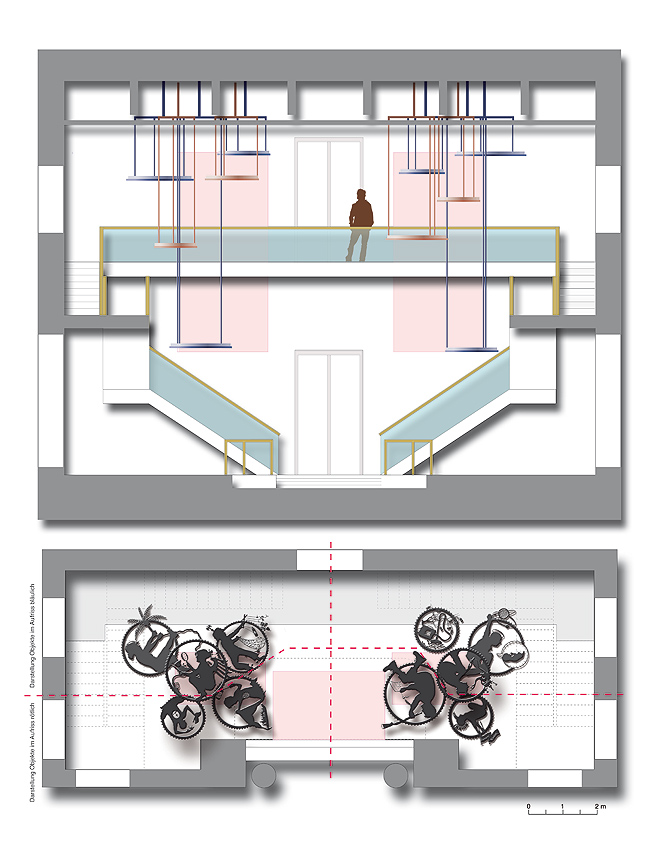
Competition Humboldt Forum Berlin – Staircase Portal V, 2017
Vorüberlegungen
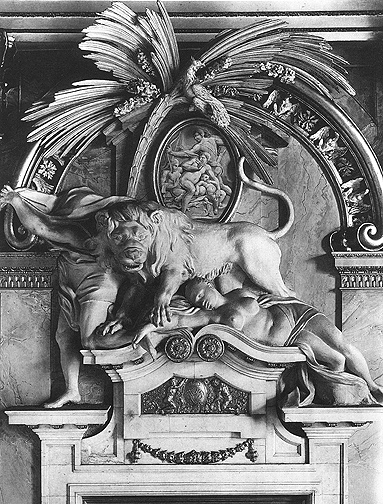
Der Raum war im historischen Schloss der Vorraum zum Rittersaal, einer der bedeutendsten Raumschöpfungen Andreas Schlüters. Ich bewundere Schlüters Arbeit, insbesondere seine Deckengestaltungen, seit langem. Mit unerschöpflicher Fantasie türmt er bildliche Darstellungen aufeinander und kombiniert virtuos verschiedenste Darstellungsformen. So entsteht ein außerordentlich reiches, allegorisches und optisches Beziehungsgeflecht. Ich unternehme mit meinem Projekt den Versuch, mich dieser untergegangenen Vielfalt zu stellen und daran anzuknüpfen.
An den Wänden des historischen Rittersaales befanden sich allegorische Darstellungen der vier damals bekannten Erdteile. Sie symbolisierten dort die irdische Welt, im Gegensatz zur gemalten himmlischen Welt an der Decke. Die Raumhülle bildete so die kosmologische Ordnung der Welt ab, in die sich der Bauherr, König Friedrich I, ideell gestellt sah. Im Humboldt Forum sollen heute die "Weltsammlungen" der Berliner Museen gezeigt werden. Besondere Verantwortung liegt dabei auf dem Austausch mit- und umfassenden Blick auf die "Welt". Man knüpft also durchaus an etwas an, was das historische Ausstattungsprogramm - wenn auch mit anderer Zielrichtung - an diesem Ort bereits vorgab: ein umfassendes Bild von der Welt zu zeigen.
Beschreibung
In "Pars pro toto" geht es um das Erkunden der Welt - ihr Erfassen, Verstehen, Nachvollziehen und ihre Erforschung - ggf. auch ihre (wenigstens geistige) Inbesitznahme und Umwandlung des uns umgebenden Kosmos. Nicht verkannt wird dabei die aggressive Hybris, in die dieser Drang auch münden kann.
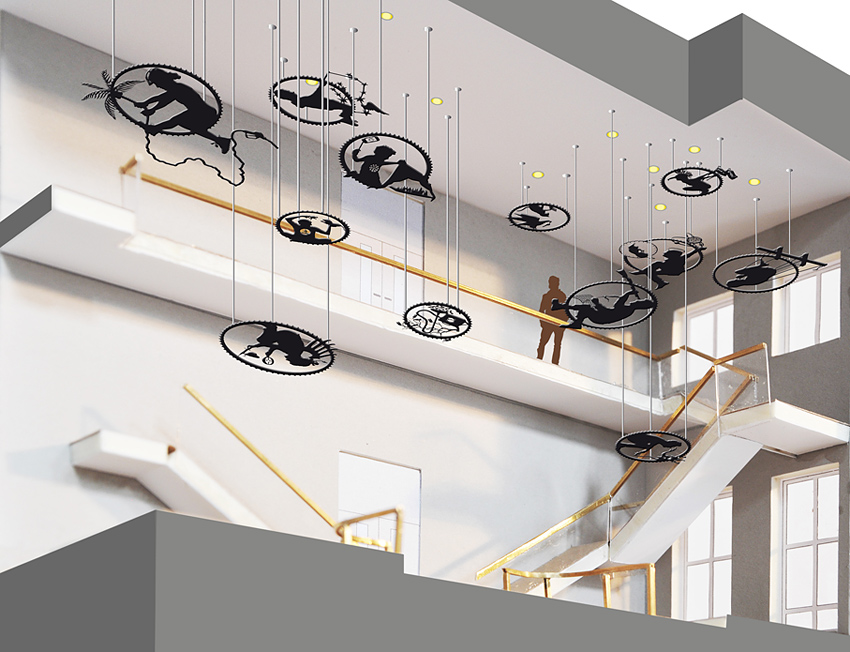
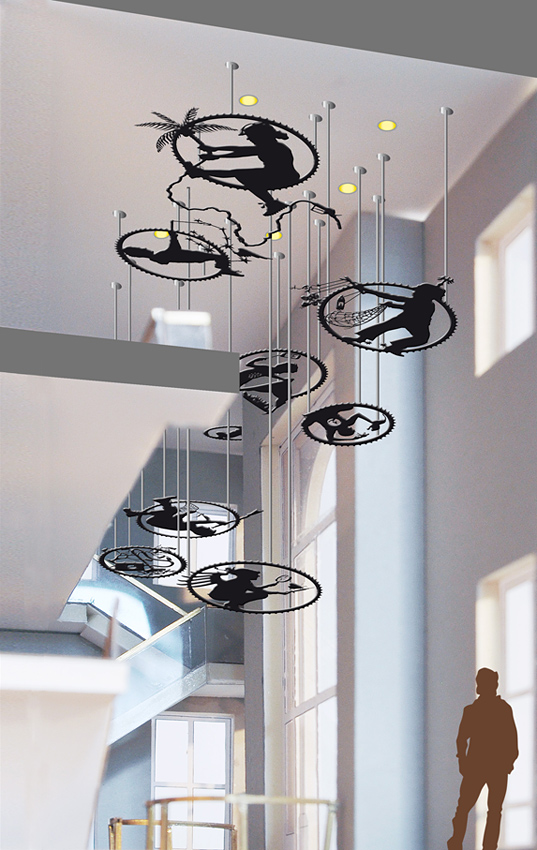
Viele "Attribute" meiner Allegorien sind durch die "Erdteile" Schlüters angeregt: Waffen, Kopfbedeckungen (Helme, indianischer Federschmuck), wehende Fahnen und Draperien, heraldische Tiere (Adler, Löwe), Pflanzen (Palme)... Der kleine Junge beispielsweise, der neugierig ein Tuch wegzieht und darunter ein Boot voller Menschen entdeckt, geht auf die Darstellung "Afrika" zurück, die eine Figur zeigt, deren Kopf (noch) unter einem Tuch verborgen ist.
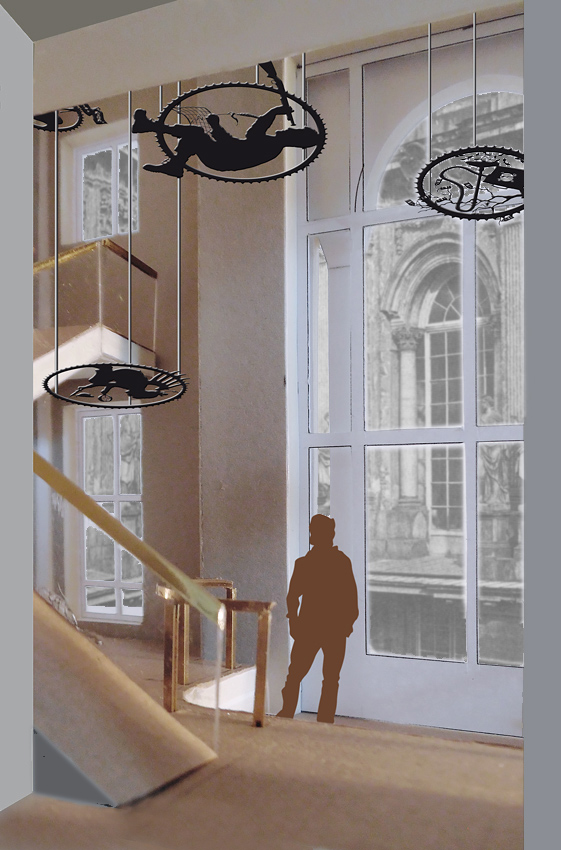
Die Objekte hängen wie herabschwebende Elemente einer imaginären Deckengestaltung im Raum. Die einzelnen Elemente könnten wie Zahnräder ineinandergreifen. Die Arbeit erschließt sich erst, wenn man sich im Raum bewegt. Beim Blick durch das Fenster in den Schlüterhof ist ein Dialog mit der Schlossarchitektur und ihren allegorischen Statuen und Emblemen möglich.
Wolf von Waldow, 2017